Booby Trapped Treasure Pit on Oak Island

Tags

, , , ,

Intriguing as it sounded, I have to admit I was a little skeptical the first time I heard of buried treasure on this little island. But the more I’ve read about it, the more fascinating it is.

The story is that back in the late 1700’s, a young man boated over to Oak Island (Nova Scotia) on a fishing trip. On the island he discovered a 15 foot wide hole in the ground, mostly filled in. A nearby tree had marks on its roots, as if they were used for a pulley or hoist to work in the hole. Very curious, he returned with two friends. With only hand tools the three of them dug and dug and discovered flagstones and layers of timbers at various levels – obviously put there as barriers. They couldn’t get very deep digging by hand so they ended up abandoning it.

Years later they returned with more equipment and some financial backing. They were able to dig much deeper, again finding various barriers, a cap stone at about 90 feet (that said, although they didn’t know it at the time, “forty feet below two million pounds are buried”). With daylight ending and the next day being Sunday, they left the hole until Monday. When they returned the hole was filled with water to about 33 feet deep (sea level). Booby trapped!

Since then, every attempt to pump out the water and see what’s down in the treasure pit has been futile. It seems that the treasure pit was designed with underground channels leading out to the sea to allow water to fill the hole should anyone try to dig down too deep. The volume of water has proven impossible to pump out. So far, all modern technology has failed to determine what’s buried there.

Bore samples have been taken over the years, and revealed metal, oak, coconut matting (nearest palm tree is 1500 miles away), clay barriers, metal pieces and soft metal (coins?), supposedly some gold fragments, voids (such as a cavern) and even a concrete vault at 170 feet that contained a sheepskin with letters written on it. A more recent camera inspection of a bore hole over 200 feet deep revealed several treasure chests and even a human hand floating in a cavern below.

Want to know more? Read much more about this fascinating subject at these websites:

The Oak Island Enigma

Oak Island Treasure

Oak Island Treasure, History, The discovery of the Oak Island Money Pit

Oak Island Treasure, A fortune may still be buried off Nova Scotia

The Mysterious and Unexplained, The Story of Oak Island

Mysteries of Canada, The Treasure Pit of OAK ISLAND

The Story…


A cool 3D graphic for you detail nerds…

———————-

Do you love to read?  Then try these provocative (but very appropriate) ebooks authored by some rising stars, http://bottlependantlight.com/free-ebooks/

Money is tied to your body in more ways than one

Tags

, , , , , , ,

When you think of “health” and how to improve yours, do you ever think that how you treat money has anything to do with it? Health and how you deal with your finances are very much related, maybe as much as health is affected by sleep habits, nutrition and exercise. Read this article, Get Out of Debt For Your Health to find out how to eliminate one of the most common health problems.

Of course the reverse is true too – you can’t work hard, make money or get out of debt as easily if you’re not healthy. Sounds too simple but quite often we don’t take advantage of all the free information that is available to help us. Find out more about taking care of yourself at Dr Gily’s health promotion and weight loss site.

Tricked by the Tax Write-Off

Tags

,

Do you think tax write-offs are smart? Have you ever bought anything or kept something for the tax write-off? If so you might want to rethink this strategy. Read more about this important topic at Creating True Wealth.

Make Money Blogging

Tags

, , , ,

Lots of people are jumping on the internet band wagon to try to cash in. There are lots of ways. Aside from selling stuff directly, one of the most common ways to make money is through blogging. How it works is fairly simple in concept: You write and write diligently about things you are passionate about, and advertise on your blog with something like Google AdSense or Yahoo/Bing adCenter. As people come to your website and click on the ads you place there, you get paid! Pretty sweet, huh!

Setting up a website and getting ads on it is pretty easy. The hard part is getting people to come to your website. There are a lot of tricks you must learn to bring people to your web pages, like doing guest posting and guest articles on others’ websites, commenting on others’ blogs and in forums, joining blog communities/carnivals, joining directories, linking to other blogs, search engine optimization, using title tags and anchor text (text with hyperlinks), creating single web pages like Squidoo and more. The best article I’ve read on the subject is How To Make Money With A Blog.  And here’s an article on how to get your website listed in The Open Directory.

Good luck with the money explosion!

Self-Publish Your Book the Easy Way

Tags

, , , , ,

I’m going to make this short and sweet, since the links I provide below will steer you to all the specific information you need to publish your book.

Self-publishing a book is pretty straightforward these days. There are certain hoops you must jump through (such as very specific document formatting) but there is help. In addition to being able to publish your book quite easily and fast, it is amazing that it costs virtually nothing out of pocket. As you sell books, the publisher will take a cut and give you a royalty. Since with ebooks there is no printing, inventory, storage, or shipping and handling, your royalty will be quite respectable. Even with print-on-demand hard copy books there is no inventory or storage so your royalty is still pretty substantial.

What a lot of people find difficult is getting started. How do you even begin to self-publish a book? I’ve found some resources that will get you “out there” real fast and relatively simply. I’ve personally used these so I know they work, especially with no prior self-publishing experience.

Your eBook Everywhere. If you want to publish an ebook version of your work, downloadable from mainstream ebook stores in nearly any ebook format, then I would recommend Smashwords.com. Smashwords is an excellent publishing resource. They will publish your book on Smashwords, Amazon/Kindle, iTunes/iPad/iBooks, Sony Reader, Barnes & Noble/Nook, Diesel, and more. In order to get your ebook in all these formats they have strict formatting requirements for your master file. But their free Smashwords Style Guide is one of the best guides I’ve ever seen for formatting using Microsoft Word. Perhaps the hardest part will be getting your master file in the correct format (or this may be easy for you if you’re a Word pro). The rest of the publishing process is pretty painless. If you get into trouble formatting your book, you can pay to have someone help you (they have recommendations for this). In addition to all the online listings of your ebook, you will also have your own listing and author page on Smashwords where the world can view a sample of your book. Smashwords will allow you to use electronic discount coupons for your book to help promote it.  There are lots of other cool publishing features too.

Your eBook on Kindle. If you only want to publish your ebook on Amazon/Kindle you may find it pretty trouble-free to meet their formatting requirements. And they have a free book to help you, Publish on Amazon Kindle with Kindle Direct Publishing. See this example of the finished Kindle ebook.

Your Book Printed. If you want to publish and make hard copies (paperback) of your book available for sale on Amazon, and Barnes & Noble, then I would recommend Createspace.com. Their formatting requirements are doable without much pain and if you have the creativity to design your own book cover, you can do your entire book yourself. You can also pay to have various degrees of help with your book and/or the cover. In addition to your listing with Amazon, and Barnes & Noble, you will have your own listing on Createspace. You can buy your own copies from Createspace at a discount too, or have copies drop shipped to anyone you like. This is a great way to get your book into the hands of book reviewers and bloggers.

If you don’t want to pay for professional help with formatting, editing, or cover artwork, just make sure you get advice on how to do these things properly. The guides above will pretty much lay it all out. Your book will be competing with books that are done by other professionals so you’ll want to make sure your book measures up. For more tips check out A Newbie’s Guide to Publishing.

Once you publish your book, you’ll want to next figure out how to “get it known.” That is the tricky part. Most books that are published do not sell well. I don’t say this to discourage you. Some of the ones that do sell big have big publishing companies behind them. But there is also a growing number of self-published authors that have sold hundreds of thousands of copies. Some of it is luck, being at the right place at the right time – striking a nerve. It could be you. Go for it!

Duped by the property ladder

Tags

, , , , ,

We have fallen for the line that houses are a “great investment” and if you can quality for a loan you should buy one (and the biggest, nicest one you can “afford”) so you don’t keep throwing your money away on rent. And then keep trading up and moving up the property ladder.

Give us a break! That’s a sure way to the poor house. There is no shame in renting and it is not throwing money away. Do you throw your money away when you buy groceries, clothes for your kids, or health insurance? No. You have to pay for things to live, including your shelter one way or another. That’s just the way it is. Your shelter is going to cost, and it’s just a matter of who you are paying – the rental owner or the bank and government. And you’ll probably always pay more to the latter (or the ladder – however you want to look at it).

If you rent you have pretty low risk. If you buy, then you have to pay the property taxes, insurance and maintenance. Plus, if you buy a house with a loan, you’re going to pay the bank loads of interest, and keep paying for decades unless you’re smart about it.

If you do buy a house, here’s how to be smart about it. Put at least a 20% down payment on it (or whatever amount eliminates the need for mortgage insurance, which by the way protects only the bank, not you). The best policy is 100% down payment. But most of us won’t wait until we save the full amount, so just make sure the down payment is sizeable. Then, pay off the loan in ten years or less. Less is better.

If you can’t put at least 20% down and pay the house off in ten years or less, then you are buying too much house and/or paying too much. Shop around. Wait. Downsize it. Resist house fever. Your peace of mind later is worth resisting the impulse to buy that too big/too expensive dream house now.

Reading, Writing, and A-myth-you-aint-rich

Tags

, , , , , , ,

How do we learn and gain knowledge? While in some cultures story telling is how wisdom and experience are passed to the next generations, in most places throughout the world the most popular method is reading. And while plenty of ideas are cast into our homes through television, newspaper, radio and the internet, the majority of this information is for marketing purposes or with some specific not-good-for-you agenda in mind. Real understanding comes from reading real books and serious writings. The bookstore and library (and part of the internet) are rich with it. But there is a catch.

There, at some level, has to be a trust that what is written is true and wise. The distant past is impossible to verify, even yesterday. How then can we know that what’s written is correct? Sure, we can research and compare writings to other writings. But what if the majority of writings on a subject are biased? Then we can never know for sure. In the end it comes down to our research, belief and opinion that what others wrote about was accurate. And there’s one more complication.

Quite often, the best we have is a half-blind faith in the writings of people we know very little about. “Half-blind” because, while we’ve done the research, we don’t know the writers. And there are plenty of deceitfully crafty writers. So with this half-blind faith we may be being duped about a lot of things. Can we then really trust any writings at all? There is one measure worth considering.

Credibility is worth more than writing genius. Sincerity takes blind faith and turns it to knowing. But we can’t possibly know the author to determine integrity, can we? Here’s the thing: We can’t necessarily trust what was written about them, but we can determine credibility and sincerity in their writings. Yes, between the lines! While agenda and writing style often make more copy and get more notice, a fox can usually smell a fox regardless. And a rose ends up smelling like a rose.

Credibility is buried in the text of an author’s writings and it makes itself known to the avid reader. That is why we must read and read books and articles. But you say, “I don’t have time to read a lot.” Then narrow it down. Discernment is cultivated by reading the writings of people who help for the love of helping.

For example, if you want to know about personal finances (and more) there is author Daniel Murphy, giving away free advice for the love of it. And there are a host of others dedicated to writing about all kinds of things for which they’re passionate. You can probably find some roses if you look.

We are losing touch in this area, folks. We’ve seen reports that most people have not read a non-fiction book since high school! We are not reading, much less serious books or articles by writers doing it for the love of helping others. Instead we want to be entertained. If we’re getting all of our “higher education” from television, newspaper, radio and the trash-side-of-the-internet then we’re letting the fox outfox us. That, actually, explains a lot considering the state of financial affairs worldwide.

Forever a Mobile Home

Tags

, , , , ,

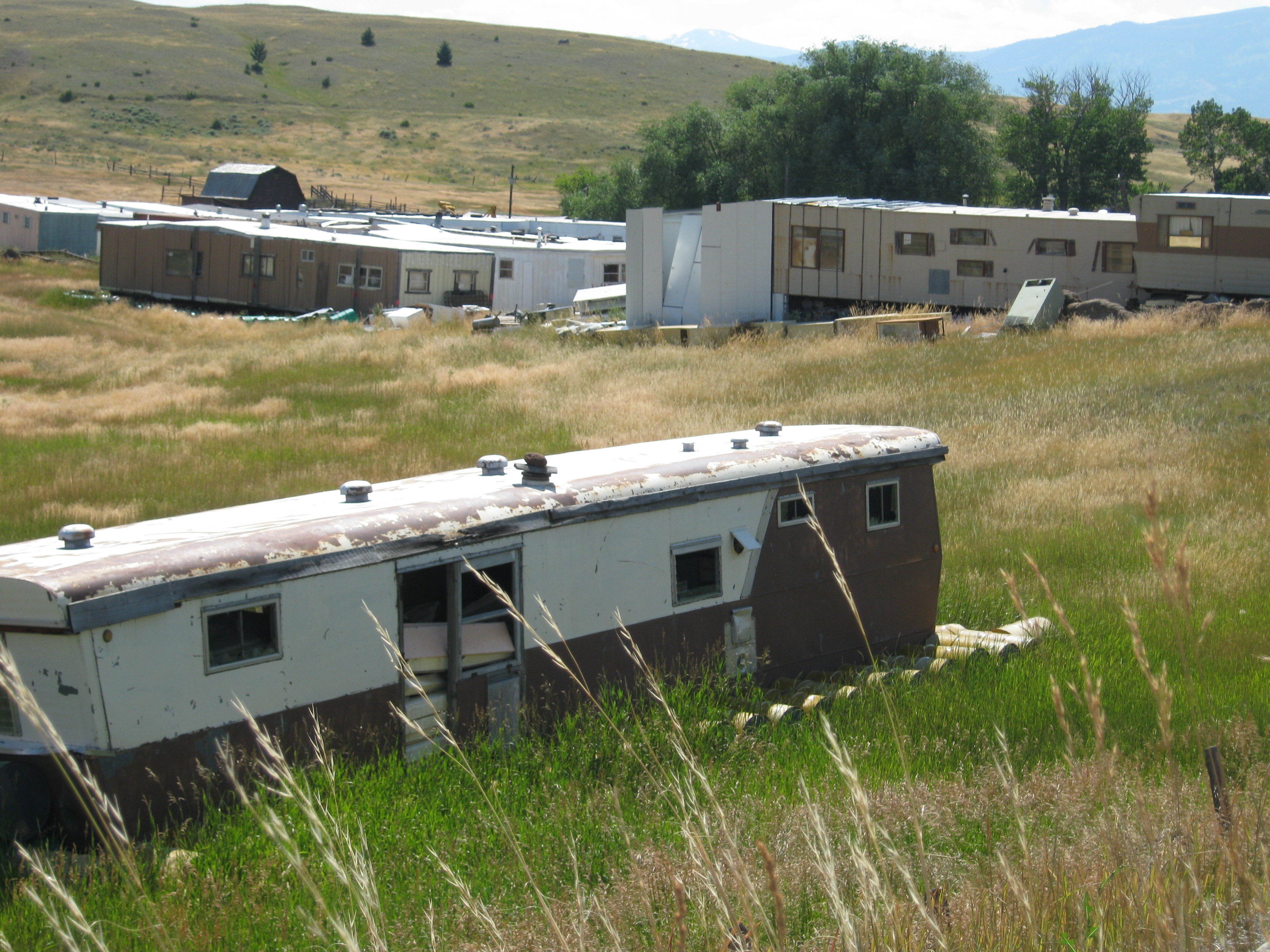
Seems like every state, every county, and every town is littered with a “shady grove” mobile home manor. I’m not criticizing the folks who live in mobile homes. Some of our best friends do. And I’ve lived in mobile homes more than once in my life – from a 1949 hand-painted two-tone Shultz to a newer doublewide that hurt my pride and my wallet. And I despise them now.

Sure, if I was lucky enough to be able to buy a lot with an ocean view with a mobile home on it, I’d live in it for a while. But for everyday living, you’re throwing a lot of money away. There is no advantage, cost or otherwise, to living in a mobile home. They depreciate like a car, and end up looking like they belong in a junk yard. You’re better off to rent and save the extra money you wouldn’t have to spend on lot rent, mortgage interest, taxes, insurance and maintenance – you’d be much further ahead.

Check out the costs of fixing up this mobile home (http://www.youtube.com/watch?feature=endscreen&v=rCYUnS24m-0&NR=1)

Please, try like anything to get out of a mobile home. If you wait too long this will be your neighborhood.

Tiny Two Tango Bathroom

Tags

, , , , , , , , ,

Deborah and I enjoy watching those TV shows where people are looking for a house to buy. Their wish lists and desired house sizes are usually much bigger than their budgets. And they always turn up their noses at any bathroom that is small, especially if it only has one sink. They want a spa bathroom and think they can’t do with less. They should.

We have written before about not buying too much house. That’s the biggest mistake people make – they buy as much house as they’re qualified to borrow the money for and not what they can really afford. Then it takes them too long to pay it off.  Our rule is to buy only as much house as you can pay off in ten years, or less if at all possible!  Roger Schlesinger (The Mortgage Minute Guy) agrees and explains in the video below.

That may mean a smaller bathroom – with only one sink as well. What’s wrong with that? People think it’s impossible to share a bathroom while getting ready in the morning. Deborah and I have been sharing a small, one-sink bathroom every morning, no problem, for almost eight years. Our house has been paid off for almost two years.

So take your pick – small bathroom and affordable sized house, or spa bathroom with the big house and be slave to the bank for many years longer.

Platinum-Chromium Stent is Quite a Stunt

Tags

, , , , , , , , ,

Just found this cool online article by R&D Magazine about some amazing metal used to improve a life saving heart procedure.

When inserting coronary artery stents, those made of 316L stainless steel are difficult to see by X-ray. To aid doctors during this life saving procedure, a dream team developed a unquie platinum/chromium alloy that is now used for the manufacture of improved coronary stents with enhanced X-ray visibility and other features.  See the full article at  http://www.rdmag.com/Awards/Rd-100-Awards/2011/08/Platinum-adds-X-ray-visibility/.  This product was a 2011 R&D 100 winner!

I’m proud to say I once worked with the highlighted metallurgist Heilmann back in the day at Sandia Labs before he was famous…

Developers:
National Energy Technology Laboratory
Boston Scientific Corporation Inc.
Carpenter Specialty Alloys
Minitubes, ZAC Technisud
Accellent Inc.

The dream team that developed this platinum/chromium alloy for the manufacture of these unique coronary stents:
Paul Jablonski, Principal Developer, National Energy Technology Laboratory
Paul Turner, Principal Developer, National Energy Technology Laboratory
Edward Argetsinger, National Energy Technology Laboratory
Dennis Boismier, Boston Scientific Corporation Inc.
Mark Broadley, Accellent
Matthew Cambronne, Boston Scientific Corporation Inc.
Charles Craig, Boston Scientific Corporation Inc.
Roger Dickenson, Accellent
Richard Gleixner, Carpenter Specialty Alloys
James Heilmann, Carpenter Specialty Alloys
Ed Pannek, Boston Scientific Corporation Inc.
Philippe Poncin, Minitubes ZAC
Herb Radisch, Former Boston Scientific Corporation Inc.
Jon Stinson, Boston Scientific Corporation Inc.
Louis Toth, Boston Scientific Corportion Inc.
Thomas Trocero, Former Boston Scientific Corporation Inc.